How to Read a Booth-Level Vote Swing Report
"Swing" is the single most useful number in election analysis, and also the most commonly misread. This guide walks through what a booth-level vote swing report actually shows, using a real report from Mau (AC 356) as the example, and what to actually do once you've read it.
What "swing" means
Vote swing is the change in a party or candidate's vote share between two elections, measured at the booth level rather than the constituency as a whole. A constituency-level result can hide enormous variation — a seat won by 2% overall might contain booths that swung +15% one way and -10% the other. Booth-level swing is what tells you where the real movement happened.
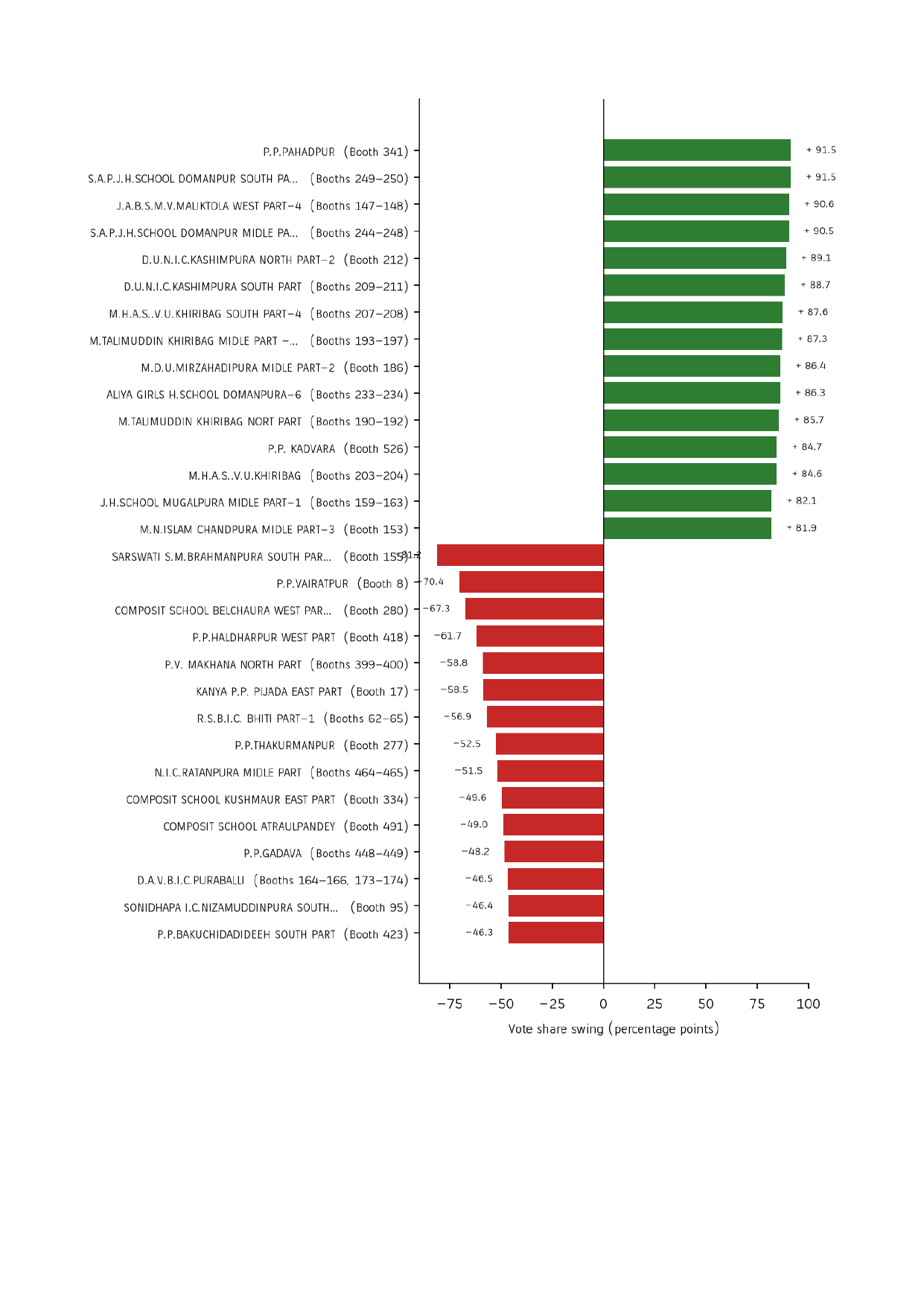
How to read the chart
Each bar represents one booth's change in vote share for a party between two election cycles — in this example, the Suheldev Bhartiya Samaj Party's swing in Mau between 2017 and 2022. Bars pointing one direction show gains; the opposite direction shows losses. The length of the bar is the magnitude of the swing, not the number of votes — a small booth with a big swing can matter less in absolute votes than a large booth with a modest swing, so read swing alongside booth size, not in isolation.
Three questions to ask of any swing report
- Where are the biggest positive swings, and why? Look for a local cause — a new candidate from that area, a caste or community concentration, a local development project — rather than assuming it's random.
- Where are the biggest negative swings? These are your early-warning booths. A negative swing in a booth that was previously strong is more urgent than a weak booth staying weak.
- Does the swing pattern cluster geographically? Swings that cluster around a specific area point to a local issue you can address; scattered swings point to a broader, harder-to-fix trend.
From swing to action
A swing report is only useful if it changes where you put ground resources. Booths with strong negative swing need the campaign's attention before polling day — a visit, a local issue addressed, a volunteer conversation — while booths with strong positive swing are worth understanding so the same approach can be repeated elsewhere in the constituency.
Pairing swing with booth strength
Swing tells you direction of movement; a booth strength report tells you the resulting position. The two together — where you're moving, and where you currently stand — is what a serious ground strategy is built on, not either number alone.
See the full election analysis module
Vote swing, candidate performance, party performance and booth strength — all from official ECI data.
See how it worksWant this analysis run for your own constituency? Get in touch here — we typically respond within a few hours during business days.